Tiki culture has become increasingly popular in recent years, with its vibrant colors, tropical vibes, and unique wooden sculptures. But what exactly is a wood carved tiki totem and what is the significance behind it?
In this article, we will learn about tiki statues and their significance in famous wooden carvings.
The Origins of Tiki
The word “tiki” comes from the Maori language of New Zealand and refers to the first man created by the gods. In Polynesian mythology, people also know tiki as the god of fertility and the creator of the first woman. Tiki culture has its roots in Polynesia, specifically in the islands of Hawaii, Tahiti, and New Zealand. The Maori people created the first tiki sculptures as a way to honor their gods and ancestors.
The Significance of Carved Tiki
Carved tiki totems are more than just decorative pieces.
Polynesians think hand-carved tiki totems and masks are vital and possess spiritual powers.
Each tiki statue represents a different god or ancestor and brings safety, wealth, and luck to the owner.
The intricate carvings on these primitive art pieces also hold symbolic meanings, such as strength, courage, and fertility.
The Art of Carving Tiki
Generations have passed down the traditional Polynesian art form of hand carving tiki statues.
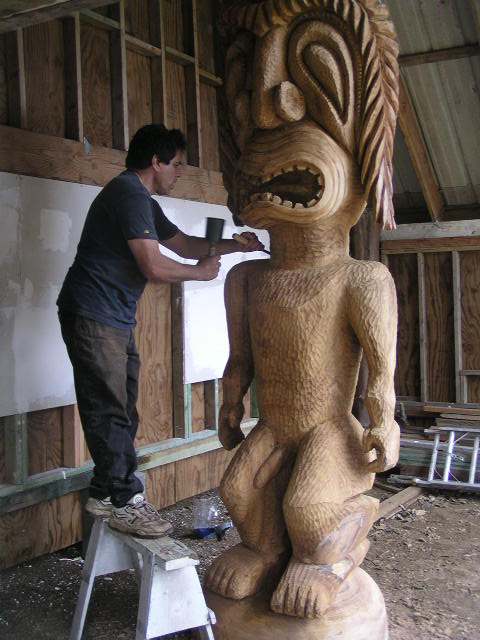
To create wooden masks and tiki sculptures, the first step is selecting the appropriate wood. People often source this wood from fallen trees. Once you choose the wood, you give attention to the intricate details of the artwork.
OLYMPUS DIGITAL CAMERA
The most commonly used wood for carving tiki is the Koa tree, which is native to Hawaii. The carver then uses traditional tools such as chisels and adzes to shape the wood into a tiki figure. The final step is to add intricate details and designs, which can take hours or even days to complete.
The Different Types of Carved Tiki
Hawaii has many carved tikis, each with its own meaning and purpose. Many tiki options from Hawaii, but mainly found at tikimaster art gallery.
The “Ku” tiki is the most common tiki idol, representing the god of war and believed to bring protection and strength. The “Lono” tiki symbolizes fertility and portrays a pronounce belly and a joyful face. The god of creation, “Kane” tiki, often appears with a long beard and a serious expression.
Tikis in Hawaii are rarely hand carved traditionally because of the high cost of living. This makes it challenging to create tiki carvings.
The Modern Day Tiki Culture
While tiki culture has its roots in Polynesia, it has become a global phenomenon in recent years. Tiki bars, restaurants, and events are everywhere, often using carved tiki totems as decoration. Hawaiian culture’s popularity has increased demand for real carved tiki sculptures. Artists make modern versions of traditional designs.
In Conclusion
Carved tiki totems hold a rich history and cultural significance that goes beyond their vibrant and eye-catching appearance. Tiki statues represent Polynesian culture and bring protection, prosperity, and good luck to their owners.
Carved tiki is an interesting art form that captivates people worldwide. It appeals to those who like wooden sculptures. Whether they collect or simply appreciate its beauty and meaning.
Looking for tiki? Tikimaster.com has many carved tikis for sale and offers free shipping in the U.S. Buy from Oahu or online.
Tiki culture is currently in vogue, characterized by vibrant hues, tropical atmospheres, and stylish wooden masks and totems. But beyond the surface level appeal, there is a rich history and symbolism behind the art of carved tiki. In this article, we will explore the artistry and symbolism of carved tiki and its significance in Polynesian culture.
On the other hand, a tiki with its hands on its face represents a symbol of protection. People often associate this tiki design with the idea of safeguarding oneself or others from harm or negative influences. Covering the face with hands is a way to protect against dangers or bad vibes. It serves as a reminder to prioritize self-care, emotional well-being, and the protection of loved ones.
These tiki designs have meanings from Polynesian mythology and culture. You can find them at tiki bars such as Don The Beachcomber or Trader Vic. They reflect the importance of being mindful, cautious, and protective in various aspects of life. Whether used as decorative pieces, tattoos, or as symbols in traditional ceremonies, tikis continue to hold significant cultural and spiritual value in Polynesian communities.
Symbolism in Carved Tiki
In Polynesian culture, people believe that the gods created tiki as the first man. Their mythology sees it as a symbol of protection and good luck, so it holds a special place. Tiki carvings show human qualities like strength, courage, and wisdom through bold features.
The patterns and symbols carved into tiki also hold great significance. For example, the spiral pattern represents the journey of life, while the fish hook symbolizes prosperity and abundance. These symbols add depth and meaning to the already intricate carvings, making them more than just decorative pieces.
Uses of Carved Tiki
In traditional Polynesian culture, people used carved tiki for various purposes, including religious ceremonies, piece of art, protection, and storytelling. Today, people still use them for these purposes, but they also popularize them as decorations in homes and businesses.
Trader Vic Female figure
People use carved tiki totems in gardens and patios to add a tropical touch to their outdoor spaces. Wooden masks are also popular as wall hangings, bringing a unique and cultural element to any room.
OLYMPUS DIGITAL CAMERA
In modern times, carved tiki have become popular decorative items, often used in tiki bars and tropical-themed parties. Showing respect and use these figures correctly are highly important because they are culturally important. Demonstrating respect and correctly utilizing these figures because of their cultural significance has been at the fore front.
Numerous artists and carvers dedicate themselves to preserving the traditional art of tiki carving. They create remarkable and intricate pieces that honor the cultural importance of carved tikis. Galleries and shops offer these pieces, and people often use them as decorative items in homes and businesses.
The Significance of Supporting Local Artisans
In recent times, there has been a noticeable surge in the production of tiki sculptures on a large scale. Manufacturers often use cheap materials to make these mass-produced tiki sculptures, compromising their overall quality and authenticity. Modern tiki sculptures lack the detailed designs found in traditional carvings that generations have passed down.
Mass-produced replicas often lose the meaning and cultural significance of traditional tiki carvings. Traditional tiki sculptures hold great importance in various cultures, representing gods, ancestors, or other spiritual entities. They are not just decorations, but they connect to the past and carry the customs and beliefs of their community.
To keep tiki art’s essence and cultural importance, it’s important to back local artists. These craftsmen create one-of-a-kind and authentic tiki sculptures using their talent and expertise. Craftsmen know the meaning and history of each carving. They make sure every piece they create follows the traditions and customs of tiki sculptures.
By supporting local artisans, we help preserve their unique art forms and cultural heritage. Their handmade tiki sculptures honor the skill and creativity passed down through generations. They also preserve the essence of tiki art and its cultural importance.
OLYMPUS DIGITAL CAMERA
In Conclusion
Carved tiki is more than just a trendy decoration; it is a form of art that holds deep cultural significance. Each piece has detailed designs and meaningful symbols, bringing Polynesian culture to any space and telling a story. We can support local artists and their work to preserve the skill and meaning of carved tiki for future generations. By doing so, we can continue to enjoy and protect this art form.
Visit Tikimaster.com in Kailua, Oahu for a large selection of authentic carved tiki from all around Polynesia.
Tiki figures have become a popular symbol in modern culture, often associated with tropical vacations and tiki-themed bars. But these carved wooden statues have a rich history that dates back centuries. This article will discuss the history and changes of tiki figures, from their cultural importance to their current popularity.
The Origins of Tiki Figures
Tiki figures come from ancient Polynesia, which includes islands like Hawaii, Tahiti, and Tonga. These vibrant and mystical carvings held great significance in the Polynesian cultures, representing gods, spirits, and ancestors.
Islanders showed their artistic talent and skill by making Tiki statues with wood, stone, and bone. People used these statues in religious ceremonies. People believed that they had the power to ward off evil spirits and bring good luck to their owners. Tiki figures still captivate and inspire people worldwide, reminding us of Polynesian culture and its rich heritage.
Tiki figures originated in Polynesia, specifically in the islands of Hawaii, Tahiti, and New Zealand and from native americans. The indigenous people carved these figures from wood or stone and used them as religious and cultural symbols. People believed that they represented the gods and ancestors, and they often placed them in sacred spaces such as temples and shrines.
The Cultural Significance of Tiki Figures
Tiki figures were important in Polynesian culture, connecting the physical and spiritual worlds.
These figures were highly respected and considered sacred. People used them in religious ceremonies and complex rituals to connect with the divine.
People believed that these tiki figures had strong protective powers. People believed that Tiki figures possessed strong protective powers. They protected homes and communities from evil spirits. These figures stood at the entrance of houses, warding off any negative forces that lurked in the darkness.
The Evolution of Tiki Figures
In the United States around the 1900s, tiki statues became quite popular and fascinated people in the Western world. This happened because tiki-themed bars and restaurants started appearing and spreading. These places used tiki statues as colorful decorations.
This created a relaxing atmosphere that made people feel like they were in a tropical paradise. It also made them feel like they were in a special and exciting place, inspired by the South Pacific. It made them feel like they were in a special and exciting place, inspired by the South Pacific.
The movie “South Pacific,” released in 1958, played a significant role in popularizing the phenomenon of tiki culture. This movie bases itself on a stage musical called South Pacific. It tells a captivating story set during World War II in the South Pacific.
One of the notable aspects of the movie was its portrayal of tiki figures in prominent roles. Tiki figures are carved statues of Polynesian gods or ancestors and are part of their cultural tradition. However, “South Pacific” catapulted their fame to new heights.
The movie showcased tiki figures in various scenes, emphasizing their significance in Polynesian culture and mythology. These figures depicted powerful and mystical beings, adding an air of intrigue and fascination to the narrative. As a result, the film not only entertained audiences but also sparked a newfound interest in tiki culture.
The popularity of “South Pacific” led to a surge in demand for tiki figures and related merchandise. These unique and enigmatic objects fascinated people, who wanted to include them in their own lives. Tiki bars and restaurants started appearing, giving people a chance to experience tiki culture.
The movie’s success caused TV shows and ads to use tiki elements. Tiki-inspired fashion, music, and art also gained traction, further solidifying the phenomenon’s place in popular culture.
In conclusion, the release of the movie “South Pacific” in 1958 played a pivotal role in popularizing tiki culture. The movie made tiki figures popular and wanted by giving them important roles and attracting a bigger audience. The musical “South Pacific” had a significant impact on various forms of media. It also sparked a tiki craze that endured for a considerable period.
Tiki figures have evolved years after years and people can now find them in a wide range of forms and materials. Previously, people around the world made them from wood and now focusing on sustainable materials. Skilled artisans carved intricate designs and details into the figures. In Polynesian cultures, people saw wooden tiki carvings as sacred and they represented gods, ancestors, or mythical creatures.
In recent years, however, people have also recreated tiki figures using modern materials such as resin and ceramic. These contemporary versions offer a more durable and versatile option for collectors and enthusiasts. You can shape and size resin tiki figures differently, allowing for more creativity and experimentation in their design. Ceramic tiki figures have a sleek look that adds elegance to any area.
Tiki figures hold immense cultural significance. They have strong connections to Polynesian history and mythology, showing the region’s cultural heritage through visuals. People believed that Tiki figures possessed spiritual powers and frequently used them in religious ceremonies and rituals. People regarded them as guardians, who protected their owners from evil spirits and brought good fortune and prosperity.
Today, tiki figures have transcended their traditional religious and ceremonial roles and have become highly sought-after art pieces. Their timeless appeal lies in their ability to transport people to a magical tropical paradise. These artifacts create a relaxing, escapist, and exotic atmosphere when placed in a home, restaurant, or tiki-themed bar.
The intricate carvings, vibrant colors, and unique designs of tiki figures make them a captivating addition to any space. They remind us of the beauty and diversity of Polynesian cultures. They can make people curious about the history and traditions of the Pacific Islands.
In conclusion, tiki figures have evolved from traditional wooden carvings to modern resin and ceramic versions. Culturally, people highly value them and adore them as beautiful art that brings a tropical feel to any place. People love them because they are timeless and create a magical atmosphere. Collectors and those who want adventure and peace in their spaces truly want them.
People find Tiki figures in homes, bars, and restaurants worldwide thanks to social media. They enhance the look of these places and attract attention as central features.
These carvings are popular souvenirs for tourists in tropical places. They remind them of their special trips for million people. The popularity of these beautiful carvings is increasing.
The Controversy Surrounding Tiki Figures
Tiki figures are popular but criticized for cultural appropriation.
This critique is about using tiki figures in Western culture. It says that using them is cultural exploitation and often takes away their original cultural and religious meanings. People often lose the true meaning and history of symbols when they see them as decorations or fashion items. Consequently, many people forget their cultural significance.
Critics often criticize Tiki figures for their portrayal as symbols of escaping reality and fascination with foreign cultures. This can reinforce negative stereotypes.
According to this argument, the Western world has borrowed figures from Polynesian culture. They have then used these figures to create an artificial tropical paradise or a mysterious attraction. Fans who adopt tiki aesthetics without understanding their cultural significance in purpose promote shallow perspectives of Pacific Island cultures. This, in turn, reinforces stereotypes and romanticizes marginalized communities.
The growing popularity of tiki figures in the West has controversies. Some people view these figures as harmless decorations or fashion accessories. However, others recognize that they can be harmful if used not correctly or misrepresented.
The ongoing debate about tiki figures shows the importance of understanding and appreciating their cultural origins. This is necessary to represent them respectfully and meaningfully in a globalized world.
The Future of Tiki Figures
Despite the controversy, tiki figures continue to be a popular symbol in modern culture. More people are learning about the importance of these carvings and how to use them respectfully and responsibly. Artists are now using Polynesian designs and techniques in their tiki carvings to pay tribute to their origins.
In conclusion, tiki figures have a long and fascinating history that spans across cultures and centuries. Ancient wooden statues, once sacred, now captivate people worldwide with their popularity and fascination. Tiki figures symbolize Polynesian art and culture.
At Tikimaster.com, you’ll find many beautiful tiki statues that are visually stunning and culturally important throughout the polynesian islands. The statues are not just decorations but they are also important cultural relics. They symbolize the history and traditions of Polynesian and Hawaiian cultures.
Tikimaster.com sells different tiki statues from Hawaii and French Polynesia, each with its own special design and meaning. From traditional wooden carvings to modern interpretations, there is something to suit every taste and style. Skilled artisans create these statues with great care, making sure each one is a beautiful work of art.
As you explore the website, you’ll find tiki statues representing gods, ancestors, and mythical creatures. These statues represent spiritual beliefs and stories handed down over time. These decorations are both pretty and suitable for use in your home or garden. They also have a connection to the old traditions and stories of Polynesian and Hawaiian people.
Tikimaster.com is great for collectors, enthusiasts, and those who love tiki statues and their cultural significance. The website provides information and pictures of each statue. This allows you to understand and appreciate the skill and meaning behind each one.
Tikimaster.com offers a variety of tiki-themed products, including tiki statues, handcrafted tiki masks, koa paddles, and ceremonial groundbreaking sticks. Additionally, they provide tiki-inspired masks, wall decorations, and home furnishings.. These products can help create a truly immersive and authentic tiki-inspired atmosphere in your living space.
For Polynesian and Hawaiian culture or tiki statues, check out Tikimaster.com to add beauty to your home. Find the perfect tiki statue in our collection. Enhancing your space with meaningful cultural artifacts from the Cook Islands and some remote islands in the Pacific ocean.
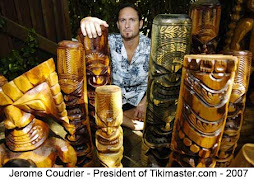
Aloha and welcome to Tikimaster's blog! After years of carving, I feel the need to share my experience and expertise with the world! My specialty is Tiki carving but I also carve Hawaiian canoes, Waka canoes, Tiki masks, Tiki totems and more. Some of my signature project reside at the Holokai restaurant in Waikiki or the Shack Waikiki.