Kulana’s early days as a baby tiki were filled with adorable moments and the beginnings of his legendary strength. Here’s a glimpse into his life as a little one:
The Birth of a Legend
Kulana was born on a warm, starry night in the valley of Waianae. From the moment he arrived, it was clear he was special. Wrapped in soft, woven blankets and wearing tiny, hand-crafted diapers made from the finest kapa cloth, Kulana was the pride and joy of his family and the entire village.
Baby Strength
Even as a baby, Kulana’s strength was evident. He could lift small coconuts with ease and often surprised his parents by moving his crib across the room. His giggles were infectious, and his bright eyes sparkled with curiosity and wonder. The villagers would gather to watch him play, amazed at his early displays of power.
First Steps
Kulana’s first steps were a momentous occasion. With his sturdy little legs, he quickly learned to walk and soon after, to run. His parents had to keep a close eye on him, as he loved to explore the lush surroundings of Waianae. Whether it was chasing after butterflies or trying to climb the low branches of palm trees, Kulana’s adventurous spirit was evident from the start.
Playtime Adventures
Playtime for baby Kulana was always an adventure. He loved playing with his friends, who were fascinated by his strength. They would build sandcastles on the beach, and Kulana would help by carrying the heaviest stones for their fortresses. His favorite toy was a small, carved wooden canoe, which he would push around with glee, dreaming of the day he could sail the ocean.
Learning from the Elders
Even as a baby, Kulana was eager to learn. He would sit on his grandfather’s lap, listening intently to stories of the ancient gods and the history of their people. His grandfather would gently rock him to sleep, whispering tales of bravery and wisdom. These early lessons planted the seeds of Kulana’s deep respect for his heritage and his desire to protect his people.
A Heart Full of Love
Kulana’s family showered him with love and care. His mother would sing lullabies to him, her voice soothing and melodic, while his father would carve small toys for him from koa wood. The entire village embraced him, knowing that he was destined for greatness. Kulana’s heart was filled with love and gratitude, shaping him into the kind and compassionate hero he would become.
Kulana’s baby days were a blend of strength, curiosity, and boundless love. These early experiences laid the foundation for his future adventures and his unwavering commitment to his people and his island home. ?
Would you like to hear more about Kulana’s childhood or perhaps another aspect of his life?
People know Hawaii for its beautiful beaches, tropical landscapes, and rich cultural heritage. The tiki is a famous symbol of Hawaiian culture.
Tiki refers to a human-like wooden sculpture associated with Polynesian deities. Among the many tiki gods, Ku is one of the most revered and significant. In this article, we will explore the history and significance of Ku tiki god in Hawaiian culture.
The Origin of Tiki Art
Tiki art is a significant and ancient aspect of Polynesian culture that dates back to the 13th century. People can trace the first tiki sculptures back to this time, showcasing the history and tradition of this art. These sculptures were highly revered and held great religious significance among the Polynesian people.
In Polynesian popular culture, people often used tiki carvings as religious idols to represent various gods and deities. People believed that these carvings possessed spiritual powers and considered them sacred objects. They placed them in holy places to connect the physical and spiritual worlds.
The term “tiki” itself originates from the Maori phrase “tiki-tiki,” which translates to “carved figure.” Tiki art is about carving wooden figures with skill and detail. These figures often depicted human-like forms with bold features, such as large heads, wide eyes, and prominent noses.
Tiki art not only served a religious purpose but also played a significant role in storytelling and cultural preservation. These carvings often depicted symbolic stories, legends, and historical events, passing down important narratives from one generation to another. The tattoos showed Polynesian culture and helped safeguard their traditions and beliefs alive.
Tiki art adapted to Polynesian cultures, with each adding their own style and meaning to the carvings. Today, people celebrate and appreciate tiki art as a form of artistic expression and cultural identity. It has gained popularity beyond Polynesia and has become a known symbol of the region’s vibrant and diverse culture.
Tiki art is an old and respected part of Polynesian culture, originating in the 13th century. These sculptures were religious idols, representing gods and deities, and were important for storytelling and preserving culture. The term “tiki” itself reflects the art form’s essence, emphasizing the skillful carving of wooden figures. People still love and honor Tiki art today because it shows Polynesian culture and who they are.
The Various Traits of The Ku Tiki Statues
The Ku tiki statues possess a multitude of distinct traits that make them truly unique and captivating. The Polynesian culture originated these statues, which have intricate craftsmanship and symbolic significance.
One of the most prominent traits of the Ku tiki statues is their imposing size. Artists typically carve these statues from large blocks of wood or stone, making them stand tall and command attention. Their size not only adds to their visual impact but also emphasizes their importance and power within the culture. Trader Vic’s restaurants and Don The Beachcomber have some of the original Ku statues.
Another notable trait of the Ku tiki statues is their intricate and detailed carvings. Skilled artisans carefully carve every aspect of the statue, from the facial features to the body adornments. The carvings often depict various symbols and motifs that hold deep cultural and spiritual meanings. The detailed carvings show the skill of the artists and represent the cultural heritage of the Polynesian people.
The facial expressions of the Ku tiki statues are also significant traits that distinguish them. The statues often have fierce and intense facial expressions, with bulging eyes, wide-open mouths, and prominent facial features. The god Ku, who links to war, power, and fertility, symbolizes the strength and protection of these phrases. The statues’ strong expressions show power and authority, highlighting their role as guardians and protectors.
Furthermore, people often adorn the Ku tiki statues with various ornaments and accessories. These can include headdresses, necklaces, and other decorative elements that symbolize different aspects of Polynesian culture. These decorations make the statues look better and also give them more meaning and symbolism.
Lastly, the materials used to create the Ku tiki statues are also noteworthy traits. In the past, people carved these statues from sacred and highly valued wood, such as koa or sandalwood. In more recent times, people have also used stone and other materials to create these statues. The choice of material often depends on the availability and cultural significance associated with it.
In conclusion, the Ku tiki statues possess a range of traits that contribute to their allure and cultural significance. Large, detailed statues with strong expressions and meaningful decorations represent Polynesian culture and spirituality.
The Significance of Ku Tiki God
Ku is the most powerful god of war in Hawaiian mythology, known as the “Kahuna Akua” among the four main gods. He appears as a strong fighter with a long beard, holding a spear and sacrificing a person.
Ku associates with agriculture and fecundity. He represents wealth and plenty, but is most famous for being strong, a warrior, and associated with the sunrise. His wife is Hina who represents the sunset.
The Role of Ku Tiki God in Hawaiian Culture
Ku tiki god was important in Hawaiian culture, as people thought he kept the islands and its people safe. He also served as a divine guardian of the Hawaiian people’s spiritual and cultural traditions. Numerous Hawaiians would present offerings and supplications to Ku, seeking safeguarding and direction.
The Evolution of Ku Tiki God in Modern Times
Christian missionaries came to Hawaii in the 1800s. They forbade the worship of tiki gods in the Hawaiian religion. Later, the government made this worship illegal. Many people destroyed numerous tiki carvings, and they almost lost the art of tiki carving.
However, in the mid-20th century, tiki culture experienced a revival, and tiki art became popular once again. In Hawaiian culture, people still respect and honor the Ku tiki god today. However, it is now more regarded as a symbol of heritage rather than a religious deity.
The Influence of Ku Tiki God in Pop Culture
Tiki art and culture have gained global popularity, extending beyond the Hawaiian islands. Their impact on international pop culture is evident.
Tiki bars and themed gatherings are gaining popularity, with individuals amassing tiki statues. The depiction of the Ku tiki god is widespread in movies, TV shows, and video games. Many bars and restaurants across the US feature the Ku symbol on tiki mugs or tiki-themed cocktail serviettes.
Conclusion
Ku tiki god is more than just a wooden carving; he is a symbol of Hawaiian culture and its rich history. As the god of war and protector of the islands, Ku holds a significant place in the hearts of the Hawaiian people. The Ku tiki god’s legacy lives on and inspires people worldwide, thanks to the revival of tiki culture.
If you are on Oahu, you can visit Tikimaster‘s showroom home of the largest Ku tiki on the island.
Do you have a favorite tiki carving or have you visited a tiki bar? Share your experiences in the comments below.
Hawaii is a beautiful group of islands in the Pacific Ocean. It has a rich culture and history, with a strong bond to the land and sea. Hawaiians have a cherished heritage that locals and visitors celebrate in Hawaii.
At the heart of Hawaiian culture lies a unique and captivating art form known as storytelling. Generations have passed down this ancient tradition, keeping the tales and legends of the islands alive. One of the most distinctive and visually stunning aspects of Hawaiian storytelling is the use of hand carved storyboards.
Craftsmen carefully make these storyboards, known as kiʻi pōhaku, as wooden plaques that visually depict stories. Each storyboard is a beautiful piece of art, carefully carved with symbols, figures, and scenes that tell a story. Hawaiian artisans create amazing storyboards, showcasing their talent, skill, and attention to detail in craftsmanship.
These hand carved storyboards show many different stories, including myths, legends, history, and culture. They protect and share Hawaii’s oral history, ensuring they remember and pass on these stories to future generations.
Beyond their aesthetic beauty, these storyboards hold great cultural significance. They are not merely decorative pieces, but rather serve as a powerful tool for storytelling and education. A Hawaiian storyteller can use a storyboard to bring the story to life. This captivates the audience and immerses them in Hawaiian culture.
The art of storytelling using hand carved storyboards is deeply ingrained in the fabric of Hawaiian society. This Hawaiian tradition reminds us to protect and respect our cultural heritage. The visuals bring Hawaii’s stories to life. They help Hawaiians and visitors appreciate and understand the unique and beautiful culture of this enchanting land.
These art pieces tell Hawaiian stories and preserve the islands’ rich history through intricate details and legends. In this article, we will explore the art of hand carved Hawaiian storyboards and the legends and folklore they depict.
The Art of Hand Carved Storyboards
The art of hand carving storyboards has been a tradition in Hawaii for centuries. Typically, craftsmen sculpt these storyboards from a single piece of wood, such as koa or mango.
They have detailed carvings of Hawaiian legends and folklore scenes and characters. They paint the carvings with natural dyes and oils to bring the stories to life. Every storyboard is a special artwork, with carvings and colors showing the artist’s unique style and interpretation.
Hawaiian Legends and Folklore
Hawaiian legends and folklore are significant to the culture and history of the islands. They represent the beliefs, values, and traditions of the Hawaiian people. Our ancestors shared stories for generations to pass on wisdom, knowledge, and understanding of the world.
One of the most prominent figures in Hawaiian mythology is Pele, the goddess of fire, lightning, wind, and volcanoes. Pele is a revered god who resides in Kīlauea, a highly active volcano on Hawaii’s Big Island.
Folklore often attributes Pele’s fiery disposition to her. Many people frequently perceive her as a striking and powerful woman. She wears red attire, symbolizing the lava from her volcano, and her flaming hair represents her.
People claim to sense her presence through the shaking of the ground, rising smoke, and fiery explosions. These phenomena alter the islands’ scenery. Pele’s stories explain volcanic activity and remind us of nature’s power and concern on the islands.
Another prominent figure in Hawaiian mythology is Maui, a demi-god known for his mischievous and heroic exploits. Maui demonstrates his talent as a fisherman, navigator, and shape-shifter with special powers that aid people.
The popular tale of Maui revolves around his attempt to slow down the sun’s movement. He accomplished this by ensnaring the sun with ropes, causing it to traverse the sky at a reduced speed. This legend not only explains the changing lengths of daylight but also showcases Maui’s cunning and resourcefulness. Maui’s stories entertain and remind us to be brave, clever, and connected to nature.
In Hawaiian culture today, history, myths, and traditional stories play a significant role. We use stories, dances, chants, and songs to pass on wisdom and lessons to future generations.
Exploring these stories helps us understand the deep appreciation the Hawaiian people have for nature. It also reveals their strong connection to the land and sea. Additionally, it shows their respect for the powerful forces that shape their islands.
Hawaiian legends and folklore are important to the culture of the islands. They show how people admire Maui for lifting the islands from the ocean.
Depictions on Storyboards
Hand carved storyboards are detailed art pieces that visually depict the fascinating legends and folklore of Hawaii. Skilled artisans jointly craft these storyboards, pouring their creativity and expertise into every detail. The carvings often adorn themselves with vibrant colors, further enhancing the visual impact of the stories they depict.
These storyboards play a significant role in preserving and showcasing the history and culture of Hawaii. Each carving tells a unique tale, whether it be a legendary hero’s triumph or a mythical creature’s enchanting journey. Carvings transport viewers to a different time and place, aiding their understanding of Hawaiian traditions and beliefs.
The attention to detail in these storyboards is truly remarkable. I carefully etch every line and curve, capturing the essence of each character and scene. The artisans skillfully bring these stories to life, infusing them with a sense of energy and movement. The carvings have bright colors that make the stories more captivating and visually appealing.
Storyboards show legends, folklore, and glimpses of daily life of Hawaiians on the island of Hawaii. Some carvings showcase scenes of fishing, where fishermen skillfully navigate the waters in search of their catch. Others depict farming, illustrating the hard work and dedication that explain cultivating the land. These daily life glimpses help viewers understand local customs and traditions, fostering a deeper connection to Hawaiian culture.
Overall, hand carved storyboards are not just beautiful pieces of art, but also powerful storytellers from the Hawaiian Islands. They show the past, culture, and everyday life of Hawaii, and interest everyone who sees them. The carvings and colors bring stories to life, preserving Hawaii’s heritage for future generations to celebrate and cherish.
Preserving Hawaiian Culture
Carving storyboards by hand tells stories, preserves Hawaiian legends and culture, and keeps traditions alive in the islands. Tikimaster still makes pretty art by hand, even though technology and mass production have made hand carving less popular. Artists on the Big Island create storyboards to preserve the tradition for the future. They also ensure its longevity by creating beautiful art, such as the goddess Pele.
Where to Find Hand Carved Storyboards
You can find Hawaiian storyboards carved by hand in many places in Hawaii, but Tikimaster.com has the largest collection. Hawaii has local markets and online stores that sell unique Hawaiian artwork.
You can hire a local artist to create a personalized storyboard with the legend or scene of your choice. These unique pieces of art were created to represent their way of life through fine art depicting Hawaiian myths and legends. They would make people wonder about the Hawaiian stories and beliefs about the goddess Pele.
In Conclusion
People carve Hawaiian storyboards by hand, and they serve as both art and a way to preserve the islands’ history and culture. If you like traditional Hawaiian legends and folklore, you must see these storyboards. They are important and beautiful, whether you collect them or just appreciate them.
Posted in Uncategorized on January 23, 2024 by tikimasterblog
Generations have passed down hand carving as a timeless art form. With simple tools and boundless creativity, artisans create magnificent masterpieces on materials like wood, stone, and even ice. In this article, we will explore the fascinating world of hand carving.
This article will discuss hand carving. We will examine wooden bears, decoys, and other hand chiseled pieces. We will also admire the skill and artistry required to create them. Learn wood carving, from tiki sculptures to eagles, using traditional techniques and feel its magical power.
The History of Hand Carving
Hand sculpting is an ancient art that has been popular for a long time in many different cultures and places. Hand sculpture has played a significant role in showcasing artistic creativity and craftsmanship across various cultures and time periods. It has been particularly prominent in civilizations such as Egypt, Greece, Native American tribes, and East Asia. These beautiful carvings are not just decorations, but also convey religious and cultural meanings, telling stories and preserving history.
Hand sculpted techniques and styles change over time, reflecting the aesthetics and values of different eras. Hand carving has always been important in art, changing from delicate Baroque designs to bold Art Deco ones.
Carvings by hand are still a crucial way for artists to express themselves. Skilled artisans and artists continue to use hand chisels today. They do this to preserve and cherish this timeless art form in the modern world.
Today, certain countries are famous for their wood carvings. Hawaii has tiki carvings, Alaska has totem poles, and Indonesia has art movements seen in other continents.
Different cultures have used wood carving for various purposes for centuries. In ancient times, people used hand carving to create tools, weapons, and decorative items. As time passed, people evolved it into a form of art and used it to create sculptures, furniture, and other decorative pieces. Today, people still appreciate carving by hand as a popular art form for its unique and intricate designs.
The Process of Hand Carving
Hand carving is a meticulous process that requires patience, skill, and precision. To start, select the material to carve, which can range from soft woods like pine to harder materials like stone. The next step is to sketch the design onto the material, which serves as a guide for the carver.
The carver uses tools to carefully remove material and create the design they want. This process can take hours, days, or even months depending on the complexity of the design.
Hand Made Decoys
One of the most popular forms of wood carving is the creation of hand carved decoys with various hand tools. Hunters or decorators use lifelike replicas of animals, typically birds, called decoys. People highly seek hand made decoys for their intricate details and realistic appearance. Artisans often make them from wood and paint them with great attention to detail, turning them into true works of art.
The Art Deco Movement in Hawaii
The art deco was a significant cultural and artistic phenomenon that emerged in the early 20th century. The global movement influenced Hawaii’s Art Deco style, which also include local culture and nature.
During this period, Hawaii experienced a rapid transformation as it transitioned from a traditional island society to a modern tourist destination. The Art Deco style perfectly captured the spirit of this art deco era, with its sleek lines, geometric shapes, and bold colors. It diverged from the previous intricate and elaborate fine arts styles, adopting a contemporary and minimalist appearance.
The Royal Hawaiian Hotel in Hawaii is a well-known example of Art Deco architecture. People often refer to it as the “Pink Palace of the Pacific.” Built in 1927, this luxurious hotel became a symbol of the Art Deco movement in Hawaii. Its distinctive pink exterior, adorned with geometric patterns and decorative motifs, perfectly exemplifies the fusion of Western modernism and Hawaiian influences.
Art Deco in Hawaii influenced not just architecture, but also painting, sculpture, and graphic design. Artists drew inspiration from the vibrant landscapes, flora, and fauna of the islands, including these elements into their works. The use of bold colors, stylized forms, and simplified compositions became characteristic of the Art Deco style in Hawaii.
The Art Deco movement in Hawaii not only transformed the visual arts but also influenced the fashion industry. The glamorous and sophisticated aesthetic of Art Deco fashion became popular among the elite and tourists visiting the islands. Hawaiian designers used Art Deco designs in their clothes, making special and colorful garments that showed the era’s spirit.
Overall, the Art Deco movement in Hawaii was a dynamic and influential period in the state’s history. It represented a fusion of Western modernism and Hawaiian culture, resulting in a distinctive and vibrant artistic expression. Hawaii’s architecture, art, and fashion still reflect the lasting impact of Art Deco’s influence.
One of the most popular forms of wood carving is the creation of hand carved decoys with various hand tools. Hunters or decorators use lifelike replicas of animals, typically birds, called decoys. People highly seek hand made decoys for their intricate details and realistic appearance. Artisans often make them from wood and paint them with great attention to detail, turning them into true works of art.
The Beauty of Hand Carved Wooden Eagles
Hand carved wooden eagles are another popular form of hand carving. Skilled craftsmen make these amazing sculptures from one piece of wood, carefully carving them to look like a real eagle. They range in size from small figurines to life-size sculptures and people often use them as decorative pieces in homes or cabins. The natural beauty of the wood combined with the skill of the carver makes hand carved wooden bears a highly prized possession.
The Value of Hand Carved Masterpieces
Hand sculpted masterpieces are not only beautiful, but they also hold great value. The time, skill, and effort put into creating these pieces make them unique and one-of-a-kind. Families often pass them down through generations and treasure them as family heirlooms. Collectors highly seek hand carved masterpieces and auctions can fetch them high prices.
The Future of Hand Carving
Despite the rise of modern technology and mass-produced items, hand carving continues to thrive as an art form. This is a tribute to the talent and commitment of the sculptors who persist in crafting these works of art. With the growing appreciation for handmade and unique items, the future of hand carving looks bright.
In conclusion, hand carving is a beautiful and timeless art form that has stood the test of time. From carved decoys to carved wooden bears, these masterpieces show the carver’s skill and creativity. When you see a hand carved masterpiece, pause and admire the skill and effort put into making it.
Posted in Uncategorized on January 19, 2024 by tikimasterblog
Kim Taylor Reece’s way of capturing hula dance has made a huge impact. It has changed people’s ideas about the dance and broken stereotypes.
Reece uses nude hula dancers in his photos to honor and celebrate the sacred and beautiful essence of hula. He displays his work in galleries and museums worldwide. His books showcase his beautiful photos, which further enhance his impact in the hula gyrate world.
Generations have passed down the Hawaiian dance, a traditional Hawaiian dance. Not only it is a form of entertainment, but it is also a way to preserve and honor the culture and history of Hawaii. One of the most well-known and respected artists in the world of hula dance is Kim Taylor Reece. This article emphasize about grass skirt, Native Hawaiians and how Kim Taylor Reece has influenced it.
The History of Hula Dance
Hula whirl has been a part of Hawaiian culture for centuries. Early settlers from Polynesian islands brought it to Hawaii and they have passed it down through generations. People in ancient times performed hula move for religious and ceremonial purposes, as well as for entertainment. The history of hula was a way to tell stories, honor gods and goddesses, and celebrate important events.
Over time, hula sway evolved and became more popular as a form of entertainment. However, it was still deeply rooted in Hawaiian culture and traditions.
In the 19th century, Christian missionaries arrived in Hawaii and saw hula dance as a sinful and immoral practice. As a result, people banned hula hop and it almost disappeared. Hula frolic became important in Hawaiian culture again during the 20th century.
People worldwide do hula spin for enjoyment and to honor Hawaii’s history and traditions, seen at Luaus too. Generations continue to pass down this beautiful and sacred dance form.
The Art of Hula Dance
Hula dance is a beautiful dance that tells a story with movement and music through artistic movements. Thanks to Kim Taylor Reece, you can now have some popular hula poses. Traditional Hawaiian instruments such as the ukulele, guitar, and drums often accompany it. Dancers use their bodies to tell stories, using their faces and hands to show emotions and add depth to their performance.
The two main types of hula dance consist of Kahiko and Auana. People perform Kahiko, a traditional hula dance, with chants and instruments in a ritualistic manner. Auana is a modern hula move with Western influences, using contemporary music and instruments.
Hula dance is not just about the movements, but also about the costumes and adornments. The dancers wear colorful and intricate outfits, adorned with flowers, shells, and feathers. These outfits are an important part of the performance and add to the beauty and storytelling of hula dance.
The Impact of Kim Taylor Reece
Kim Taylor Reece’s art form is a renowned photographer and artist. Kim has been photographing hula dancers for 30 years. Through his work, he captures their beauty and the spirit of the dance. As a result, he has gained a high level of respect and influence in the hula dance world.
Reece’s photos are stunning and convey the essence of hula dance through storytelling and capturing emotions. Galleries and museums worldwide display his art, and he has written books that display his amazing photos.
One of the single unique aspects of Reece’s work is his use of nude hula dancers. Reece wants to honor and celebrate the sacred and beautiful hula dance, even though some people may disagree. He believes that capturing the true essence of hula dance is possible by removing the costumes and adornments.
Reece’s work has greatly influenced hula dance and challenged stereotypes and misconceptions about it. He proved that hula dance is more than just fun, it’s a special and important art that deserves respect and appreciation.
Hula Dance Outfits
Hula dance outfits are an important part of the performance and add to the beauty and storytelling of hula dance. They are often handmade and adorned with traditional Hawaiian symbols and designs. Hula dance outfits differ based on the type of dance, but they all hold important meaning and significance.
Traditional Hula Dance Outfits
For Kahiko performances, dancers don traditional hula dance attire, often referred to as “pa’u”.. They consist of a long, flowing skirt made from natural materials such as bark cloth or tapa cloth. People usually adorn the skirt with flowers, shells, and feathers, and wear it with a top made from the same material.
The dancers also adorn themselves with lei, which they drape around their necks, wrists, and ankles. People make these lei from a variety of flowers and they hold different meanings and symbolism. For example, the yellow hibiscus represents royalty, while the red hibiscus represents love and passion.
Modern Hula Dance Outfits
For Auana performances, dancers don modern hula dance attire, commonly referred to as “holoku”.. They are more Westernized and often incorporate elements of Western fashion. The holoku dress is a long, flowing dress made from silk or cotton, and it adorns flowers, shells, and feathers.
Dancers also adorn themselves with lei, however, they opt for artificial flowers that are more elaborate and vibrant.. The lei are an important part of the performance and add to the beauty and storytelling of hula dance.
Conclusion
Generations have passed down the beautiful and sacred dance form of Hula dance. Not solely for amusement, but also to safeguard and respect the customs and heritage of Hawaii.
Kim Taylor Reece has greatly influenced hula dance by capturing its beauty and essence in his amazing photos. Hula dance outfits are crucial for the performance, enhancing the beauty and storytelling of this old dance style.
Through hula dance, we can continue to honor and celebrate the rich traditions and culture of Hawaii. Tikimaster.com sells all Kim Taylor Reece statues on their website. They offer free shipping to all 50 states in the US.
Easter Island, also known as Rapa Nui, is a remote island located in the Pacific Ocean. Its iconic stone statues, known as Moai statue, scatter throughout the island, making it famous. These statues, with their distinctive features and mysterious origins, have captured the imagination of people all over the world. This article discuss about the Easter Island carving Tiki’s history, importance, and the mysteries surrounding these statues.
The word “tiki” refers to a Polynesian deity or a carved figure representing a god. The Polynesian people on Easter Island believed that the statues were their ancestors. They used the statues to communicate with the gods on many islands in the South Pacific and Polynesia. People made Tiki statues from volcanic rock in the rapa nui culture and thought they had special powers and some used palm trees.
The first Moai Tiki carving discovery on Easter Island remains shrouded in mystery. Some think the Dutch explorer Jacob Roggeveen saw the statues first in 1722, but there is no clear answer. Roggeveen found Easter Island while searching for Terra Australis during his voyage on Easter Sunday.
When Roggeveen and his crew first set foot on the island, they were astounded by the sight of the towering Moai statues. Tall statues, some 33 feet high and extremely heavy, stood proudly by the coast, looking towards the huge Pacific Ocean. The explorers were amazed by the huge size and skill of the statues, which had a mysterious feeling.
The Rapa Nui people lived on Easter Island for a long time before Roggeveen came. They had already established a rich cultural tradition centered around the creation and worship of the Moai Tiki. The Rapa Nui thought the statues were not just ancestors’ representations, but also tools to talk to the gods.
The exact methods used to carve and transport these colossal statues remain a subject of debate. The Rapa Nui people used stone tools, ropes, and sledges to shape and move the Moai statues. They employed similar techniques to the Egyptians who built the pyramids.
They pondered how they could move such massive statues toping over 30 feet high without heavy equipment. They would transport them from the quarry to their final spots. Some suggest that rocking moved the statues, while a few think aliens helped.
Regardless of the method, the construction of the Moai Tiki was a monumental feat of engineering and artistic skill. The sculptors carefully carved each statue with intricate facial features, representing the unique characteristics of the Rapa Nui people. After transporting the statues over long distances, we moved them to ahu platforms on the island.
The Rapa Nui civilization had problems like cutting down too many trees and using up resources. This made them stop making statues and leave many unfinished Moai. The culture declined, leaving mysterious statues that still captivate people worldwide.
Today, the Moai Tiki on Easter Island show the cleverness and imagination of the Rapa Nui people.
The most famous and recognizable Tiki statues on Easter Island are the Moai carving. These statues have large heads, elongated ears, and solemn expressions.
People are most intrigued by how they transported and erected the Moai, the biggest mystery surrounding them. They moved some of these statues, weighing up to 80 tons, from the quarry to their final locations, sometimes several miles away. The exact methods used by the ancient Polynesians to move these massive statues remain a mystery to this day.
The Decline of Tiki Culture
The tiki culture on Easter Island declined in the 18th century because of more people, less trees, and diseases. These elements led to the collapse of the civilization. The island’s populace expanded excessively, putting pressure on resources and resulting in tree . Moreover, illnesses introduced by Europeans further drained the inhabitants and disturbed their lifestyle..
Consequently, the decline of Tiki culture was a result of these factors connected. This led to a decline in the production of Tiki statues and the abandonment of many of the island’s sacred sites. Today, there are only a few hundred Moai remaining on the island. Experts are fixing and protecting many of them completely.
Recently, more people are becoming interested in Tiki culture and adding Tiki elements to their homes and businesses. Tiki bars are enjoyable spots to relax and enjoy fruity drinks like Mai Tai or the Rapa Nui Easter Island fusion.
Bartenders could potentially have some knowledge about the history of Easter Island and are skilled at creating tasty cocktails. Mugs that resemble the Moai tiki sculpture serve certain beverages. The Moai face is a common sight there. Tiki statues are famous for their unique patterns and are a symbol of Polynesian art and tradition.
The Tiki statues of Easter Island continue to fascinate and intrigue people from all over the world. They remind us of Polynesian history, culture, and their spiritual connection to the world. Tiki statues warn us about using too much and remind us to protect our natural resources.
Trader Vic’s Tiki Bar began in the 1930s. Victor J. Bergeron, also known as Trader Vic, started it. He opened his restaurant in Oakland, California.
Vic wanted to create a unique dining experience. He wanted to transport guests to a beautiful tropical place. His travels in the South Pacific inspired this idea.
The original Trader Vic’s was a small restaurant. It had a Polynesian style, which included a roof made of thatched material, bamboo furniture, and traditional objects. This marked the beginning of the tiki fad..
The menu offered a variety of Asian and Pacific Island cuisine. It included popular dishes such as the famous Mai Tai cocktail and Chinese wood-fired oven-roasted duck.
Trader Vic’s became popular and opened many locations worldwide because of its unique concept and tasty food. In the 1950s, Trader Vic’s Tiki Bars were in larger cities like San Francisco, Los Angeles, and New York.
Trader Vic’s Tiki Bars succeed because of their special atmosphere, designed to take guests to a tropical paradise. The bars featured bamboo walls, palm frond decorations, and carved Tiki statues, creating an immersive and exotic atmosphere. Friendly staff dressed in Polynesian attire greeted patrons, further enhancing the experience.
In addition to the captivating environment, Trader Vic’s Tiki Bars also offered a wide selection of tropical cocktails. Trader Vic himself invented the Mai Tai, which became the bar’s signature drink and patrons still enjoy to this day. Other popular concoctions included the Zombie, Navy Grog, and Scorpion Bowl, all served in specially crafted Tiki mugs.
Trader Vic’s Tiki Bars gained a reputation for their vibrant and lively entertainment. Polynesian dancers, fire eaters, and live bands performed regularly to create an immersive and memorable experience for guests. Both locals and tourists loved Trader Vic’s Tiki Bars for their tasty food, unique drinks, and fun entertainment.
Tiki culture lost popularity, but Trader Vic’s Tiki Bars remained successful, representing nostalgia and escapism. Today, you can still find Trader Vic’s Tiki Bars in some places. They remind us of the Tiki culture’s golden age and the lasting charm of Trader Vic’s vision.
Conclusion
The Easter Island Tiki is still a mysterious symbol, with unknown origins and purpose. As we explore the hidden wonders of this faraway island, the Tiki statues will keep fascinating and motivating us. Easter Island and its Tiki statues will impress you if you like history, art, or want a special place to visit.
Posted in Uncategorized on December 20, 2023 by tikimasterblog
The lei o mano, or shark tooth lei, is a traditional Hawaiian adornment that holds deep cultural significance. It is a symbol of strength, power, and protection, and is often worn during special occasions and ceremonies. In this article, we will explore the history and cultural significance of the lei o mano.
History of Lei Making
Lei making has been a part of Hawaiian culture for centuries. The earliest leis were made from natural materials such as flowers, leaves, shells, and feathers. These leis were worn as a way to honor the gods and to show respect to one another. As the Hawaiian culture evolved, so did the materials used to make leis. The introduction of metal tools allowed for the creation of more intricate and durable leis, such as the lei o mano.
The Making of a Lei o Mano
The lei o mano is made from the teeth of sharks, specifically the tiger shark and the great white shark. These sharks were chosen for their strength and ferocity, qualities that were believed to be transferred to the wearer of the lei. The teeth are carefully selected and cleaned before being strung together with a strong cord. The process of making a lei o mano is a labor of love, with each tooth representing a connection to the ocean and the Hawaiian culture.
Cultural Significance
The lei o mano holds great cultural significance in Hawaiian culture. It is often worn by warriors and chiefs as a symbol of strength and protection. The teeth of the shark were believed to possess the power of the ocean, making the wearer invincible in battle. The lei o mano is also worn during special occasions and ceremonies, such as weddings and graduations, to symbolize the passing of knowledge and strength from one generation to the next.
Modern Day Lei o Mano
While the traditional lei o mano is still worn and revered in Hawaiian culture, modern day versions have also emerged. These leis are often made with imitation shark teeth or other materials, such as beads or shells, to make them more accessible and affordable. However, the cultural significance and symbolism of the lei o mano remains the same, regardless of the materials used.
Preserving the Tradition
As with many cultural traditions, the art of lei making is in danger of being lost. In an effort to preserve this important aspect of Hawaiian culture, organizations and individuals have taken on the task of teaching and promoting the art of lei making. Workshops and classes are offered to teach the techniques and history of lei making, and efforts are being made to ensure that the materials used are ethically and sustainably sourced.
In Conclusion
The lei o mano is more than just a beautiful adornment, it is a symbol of the strength and resilience of the Hawaiian culture. Its history and cultural significance make it a treasured part of Hawaiian identity. By understanding and preserving the tradition of lei making, we can continue to honor and celebrate the rich cultural heritage of Hawaii.
Have you ever worn a lei o mano? Share your experience in the comments below.
At Tikimaster.com, we thrive to provide the best, safest and most enjoyable shopping experience with the Aloha spirit! Here is what some of our cusomters have to say:
____________________________________________________________________ Over the past couple of months I have ordered several Tikis and masks from you.
“I wanted to let you folks over there know that they have all been wonderful !!! All have arrived in record time, undamaged, and have been very much enjoyed by my friends and family. I don’t know if you get tons of comments from customers, so I wanted to let you know that the quality and turn-around time have bested even some of the online giants (Amazon, Overstock, etc.)
So thank you, keep up the great work and I will be buying from you folks again and again.
Sincerely,
Rev. Scott R.
Lohki Studio”
“Hi folks,
My friend Amy sent me a link to your site, and I had to say I was impressed… There’s so many things I wanted, but I finally decided to start with the Kanaloa mask, and I just wanted to let you know that I received it today, and it’s absolutely amazing-I love it!!!
Thanks for the super-fast service, and the great tiki! I’m definitely coming back for more!!!
Dave”
“Thank you! It was a pleasure doing business with such a professional seller! Sue G.
P.S. The Tikki mask is GREAT!!!!!!”
“Just wanted to let you know that I received the Tiki sculpture yesterday and it is fantastic! And your customer service was great too.
I was a little worried about ordering something from so far away, but it was easy and effortless.
Thanks and Happy Holidays,
Denise L.”
“Mahalo Tikimaster! this was the easiest office gift I have ever purchased! It’s very refreshing to have an Online company be so responsive and great to deal with! I look forward to receiving the little Harley Dude! Believe it or not we have several Harley riders within our company here in Alaska! It’s perfect!
have a wonderful Thanksgiving Holiday!
Dani”
“Hello Jerome,
I’m just blown away with my beautiful new spear which arrived at the office this morning – larger and more beautiful that I thought! Thanks for packing so well – it arrived in perfect condition. Looks like you had a job packing it but is much appreciated. My son would be totally envious if he saw so I’ll just tell him about it! I’m going to lean up it against the wall in the master bedroom along with my shark spear so I admire every time I pass. Looking forward to my other war clubs which should come in a day or so and also my Tiki – I couldn’t pass that particular one up but plan to keep it “dressed”. Plan also to buy one more Tiki when I order my next war club. You have a great site and I appreciate the fast response and shipments.
Thanks as always,
Gene”
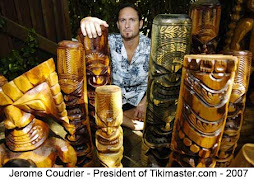
Aloha and welcome to Tikimaster's blog! After years of carving, I feel the need to share my experience and expertise with the world! My specialty is Tiki carving but I also carve Hawaiian canoes, Waka canoes, Tiki masks, Tiki totems and more. Some of my signature project reside at the Holokai restaurant in Waikiki or the Shack Waikiki.